Syrian notebook
October 28, 2017 § 7 Comments
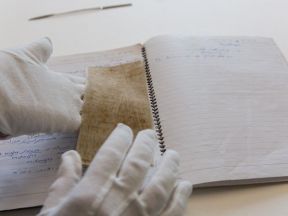
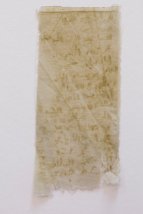
(US Holocaust Memorial Museum)
“While languishing inside a grim Syrian prison, a small group of inmates etched the names of 82 prisoners onto scraps of cloth using a chicken bone, rust, and their own blood. They hoped the list would someday make it beyond the walls of the prison, serving as a testament to the atrocities wrought by the Syrian civil war. Thanks to the bravery and ingenuity of one former prisoner, the faded scraps were recently transferred to the United States Holocaust Memorial Museum…The remarkable documents were smuggled out of Syria by Mansour Omari, a 37-year-old human-rights activist. At the start of the war, Omari was working at the Syrian Center for Media and Freedom of Expression, where he was tasked with chronicling the cases of people who had been vanished by the regime of Syrian president Bashar al-Assad. In 2012, the organization’s office was raided and Omari was arrested. According to Avantika Chilkoti of the New York Times, he spent a year in several brutal detention centers, among them the notorious prison supervised by Maher al-Assad, the president’s brother.Although he had been robbed of his freedom and, as Witte reports, subjected to torture, Omari did not stop in his quest to document the horrors taking place in Syria. Aided by four other inmates, he worked to record the names of his fellow prisoners on swatches of fabric that had been cut from the backs of their shirts. They used broken chicken bones as pens, and created “ink” by mixing rust from the bars of their cells with blood from their gums.”
–Smithsonianmag.com
the disciplinary censoring of lyric poetry
December 5, 2016 § Leave a comment
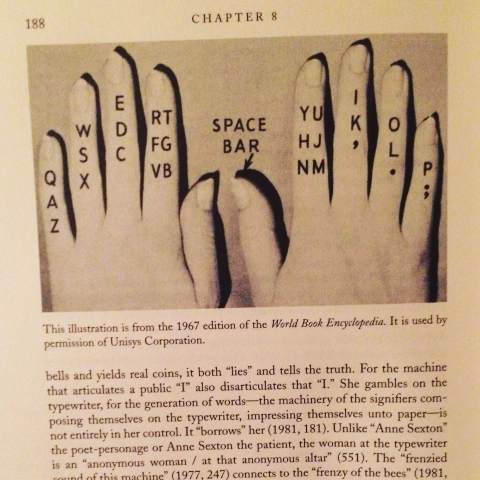
“Today poetry is largely ignored by literary studies because it forces the question of the category of the poetic as such, for poetry does not respond very well to current constructions of the ‘discipline’ of literary study, which emphasize the social, economic, or political determinants of literary production. Literary production may be so determined, but critical approaches to poetry from these angles cannot tell us much about the nature and function of poetic language, which may be said to be the marker of the literary, the presumed object of literary study. The form that the disciplinary censoring of lyric poetry takes today is a determined evasion of the special status of poetic language as such. Under the mandate to ‘historicize,’ for example, the lyric reduces to a documentary of the inner experiences and private affairs of a bourgeois ‘individual.’ The lyric is a foundational genre, and its history spans millennia; it comprises a wide variety of practices, ranging in the West from Sappho to rap. ‘Historicizing’ the lyric as essentially a late-eighteenth-and nineteenth-century European invention in effect universalizes a historically and geographically specific model of a subject. And the term ‘lyric,’ still used in this sense, has come to serve as an ideological weapon in the ongoing politicized poetry wars. Whether the lyric is read as oppositional or complicitous, it is still understood to be the self-expression of a prior, private, constitutive subject. Lyric language is a radically public language, but it will not submit to treatment as a social document – of a certain stage of capitalism, for example – because there is no ‘individual’ in the lyric in any ordinary sense of the term…”
–Mutlu Konuk Blasing, from Lyric Poetry: The Pain and the Pleasure of Words (2007)
Liu Xia, “Dark Night”
March 21, 2016 § Leave a comment
We can’t return
to that moment.
Only wind wanders down
the Long Street of Eternal Peace.
A woman passes through the dark night,
white lilies refuse to stop her.
She carries a notebook filled with poems,
the one thing she’s brought,
and follows the footsteps of ghosts.
Into the night leaf after leaf
of white paper flies beyond sight.
–6/3-4/1997, from “Dark Night,” Liu Xia, in Empty Chairs, Graywolf Press, 2015,
translated by Ming Di & Jennifer Stern
PEN International: “Liu Xia is a Chinese poet, artist, and founding member of the Independent Chinese PEN Centre. She has been held in her Beijing apartment without access to phones, Internet, doctors of her choice, or visitors since her husband, imprisoned poet Liu Xiaobo, was named Nobel Peace Laureate in October 2010. There are reports that Liu Xia’s mental and physical health are suffering due to her detention. In January 2014 Liu Xia was rushed to hospital in Beijing after suffering myocardial ischemia (lack of blood flow to the heart). She returned for further tests on 8 February 2014 but was discharged the following day and is said to be in need of specialist medical care. Her phone line was reconnected after her initial hospitalisation to enable her to call for help in case of emergency. Liu reportedly sought permission to leave China to seek medical help abroad following the incident, however, the request was denied. PEN International believes that the ongoing, extra-judicial house arrest of Liu Xia is a form of punishment for the human rights work carried out by her husband, Liu Xiaobo, and is extremely concerned for her physical and psychological integrity.”
–“On World Poetry Day Take Action for Dissident Poets,” PEN International, Monday, 21st March, 2016
“IS executes Syrian poet Mohammad Bashir al-Aani”
March 14, 2016 § Leave a comment
reported by Middle East Eye:
http://www.middleeasteye.net/news/executes-respected-syrian-poet-and-son-apostasy-1814154050
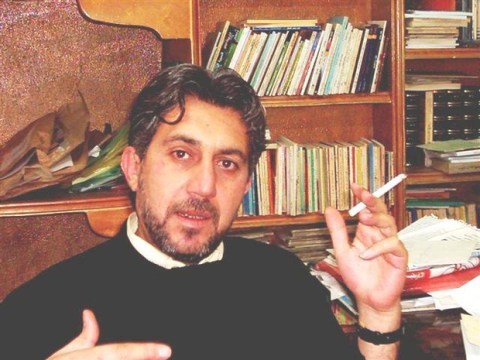
Islamic State militants executed a prominent Syrian poet along with his son this week, family members have said.
Mohammed Bashir al-Aani and his son Elyas were arrested in the eastern town of Deir Ezzor seven months ago and taken to an unknown location, thought to be an IS prison in the area, according to local news site Deir Ezzor 24.
Militants executed the 56-year-old and his son on Thursday on charges of “apostasy,” the men’s relatives told the site.
The pair were originally detained along with around 100 others when they attempted to leave an area of the city that was besieged by IS forces.
Aani had returned to the area with his son to bury his wife, who had died in Damascus after the family travelled to the capital to get better medical treatment for her.
Little is known about the poet’s son, but photos circulated by activists show a young man in his early 20s.
The older Aani – who was noted for his opposition to the government of President Bashar al-Assad – had published three volumes of poetry, and was known for his lyrical style.
His last published poem, The Banishment of the Loser, spoke of “long exhaustion,” and ended with the line, “I am the one who will trade tranquillity for defeat.”
A friend of the family, journalist Wael Sawah, paid tribute to the poet on Facebook, sending condolences to the men’s relatives and friends in Deir Ezzor. “The new Nazis of IS have killed Bashir al-Aani – but they won’t kill poetry.”
Local activists say IS – which holds large areas of Deir Ezzor under siege – has executed large numbers of civilians, mostly on charges of apostasy or spying.
Aani is the most high-profile cultural figure known to have been executed by IS in Syria in 2016.
There was outcry last December when militants from the group assassinated respected journalist Naji Jerf, who had come to be nicknamed “Uncle” due to his work training young Syrian reporters.
Jerf had been living in Turkey documenting IS crimes, an had just obtained a visa to travel to France for medical treatment when he was shot dead with a silenced handgun.
Earlier in 2015, the cartooning community was rocked by confirmation that Akram Raslan, known as “one of Syria’s bravest cartoonists,” had been tortured to death in a government prison following his arrest in 2012.
notes on a northern reading tour
November 11, 2015 § Leave a comment
- Fort St. John. Saturday morning, 3 October. I meet a unicyclist who works in the hotel. She tells me about the Northern Lights and gives me directions to the outskirts of town where there are hiking trails (go straight down 100th avenue), and also to a shop called Head Space that sells pot paraphernalia, and some good books too (straight down 100th avenue,
 turn right at 100th street). I mention I ride a road bike. “You should try a unicycle! You have a good one girl.” I walk down 100th avenue to the edge of town where it meets up with the Alaska Highway. The town is laid out on a grid, scoured and cold. Heavy machinery and pickup trucks.
 - There’s an Oilmens meeting at the Lido.
- There’s a poetry workshop in the library. Jane and I read from our poetry collections and then we talk with the seminar participants about the language of dreams, and form. The poets Greg Lainsbury and Kara Macdonald from Northern Lights College are great hosts.
- Greg’s collection Versions of North offers a complex psycho-social-intellectual collagist mapping of the Peace. I read it later, on the Greyhound from Dawson Creek to Prince George.
- Stands of poplars on the drive to Dawson Creek. Something about the sunlight and speed, they flicker like super-8 film.
- Saturday night. The poet Donna Kane has kindly arranged a reading at the Diamond Willow Retreat. Singer-songwriters have been meeting over the years to have a communal dinner and listen to music. Tonight it will be Barb Munro. They are welcoming. Tonight it’s biscuits and meatball soup in a crock. There’s a standing heater, and blankets passed around. Blue fingers and toes. It snowed the day before and there are still traces on the ground.
- Sunday morning, 4 October. Dawson Creek. I’m walking along 8th street towards the Alaska Highway. The town is deserted at this time. I happen across
 a road crew putting up new banners on the lampposts. One of the workers, all bundled up in layers against the cold, says to me, “so are you here to read another poem?” It’s Bea, a woman I sat next to at the dinner last night. We chat for a bit and she gives me directions into town. Also empty, everything closed. Even the shopfront for the Planetary Peace Commission. My throat’s sore; I’m getting a cold.
 - In Prince George we read in Rob Budde’s creative writing class at UNBC. The students ask questions about my alphabet poem, “Nothing is lost,” modelled on Psalm 119: 8-line stanzas, one stanza for each of the 26 letters of the alphabet. I pass around a scan from the manuscript.
 They seem interested that I didn’t write the poem straight through, but more like a crossword puzzle, filling in lines, working on one letter here or there, then another. Jane’s techniques by contrast seem more intuitive, steeped in the imagery of dreams.
 - At the Cafe Voltaire, Jane reads from her beautiful “Darkling” sequence which begins, “This is what I remember of life:/the glans of a penis, smooth as an acorn,//split like a cat’s eye with a vertical pupil./Weeping pearly tears.” (Here’s an audio recording of some of the poems from this sequence: “Jane Munro reads “Darkling” (1,2,12) from Blue Sonoma.”) We meet the poet Al Rempel (This Isn’t the Apocalypse We Hoped For–he has some interesting video-poems recorded from this collection). He has come from a staff meeting at the high school where he teaches.
- I’ll wake at four in the morning to catch an early plane home to Vancouver. There’s a kind of loneliness to travel like this, but also freedom.



Building the Apollo: Guest blog, AMS Bike Co-op
September 11, 2015 § Leave a comment

Archived UBC Bike Co-Op blog post 3 Sep 2015
At the beginning of the year I decided to learn how to fix my own bike after a series of unfortunate flats on my ancient Norco step-through: sudden inner tube failure; broken rubber rim strip; pierced last-minute-replacement plastic rim strip followed by dramatic explosion of inner tube followed by return to a rubber rim strip; slow valve leak. Although I’m extremely unmechanical I enjoyed learning how to fix them, first with the help of a friend (a former bike mechanic who suffered silently through all this), then through solo trial and error. I volunteer with HUB, and decided to take some of their classes at Kickstand on brakes, drivetrain, and so on, and then began to think I’d really like to learn more and, if possible, build my own bike.
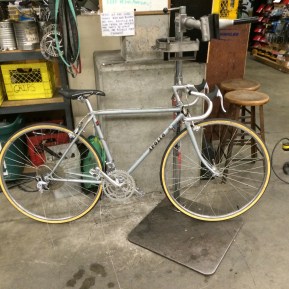
Mid-build, in the Bike Kitchen, old SUB, UBC, Summer 2015
I teach as a sessional at UBC*, so I knew about the Bike Kitchen, and was lucky that the Co-op had just started up again its Build Your Own Bike program. I turned out to be the first person to sign up. My mentor was Pablo, who also taught the courses I took at Kickstand. Pablo’s a great teacher and it was fun to work with him again over the summer. It was also good to be a student again. I decided I wanted to find an old road bike that I could overhaul, as opposed to building a brand new bike from scratch. I liked the idea of recycling and using as much of the original bike as possible. The hardest part of the project was finding a suitable bike as I needed to find a very small frame — about 19″. I was lucky, and found an Apollo Custom Sport, circa 1983, which turned out to be in really good condition, with a good frame — lugged, double-butted, Tange steel — and a triple chainset.
Pablo helped me to strip the bike, assess the various components, and advise on which parts could or should be upgraded. In the end, we replaced the seat post and saddle, the bars, the brake levers, the pedals, the front derailleur, the chain, and the freewheel.

Shimano Deore rear derailleur
I decided I wanted to keep the original wheels, which were still in good shape, instead of switching to a new rear wheel with freehub and cassette, which might also have meant cold-setting the frame. I loved the Shimano Deore rear derailleur and downtube shifters, so kept those and they work perfectly with the new freewheel. The friction shifting is gorgeous. We also put on SKS Longboard fenders and a rear rack. Pablo convinced me to try toe cages and although I was sceptical, now I love them.
It was a great experience to work with Pablo and the other mechanics at the Bike Kitchen. Everyone was super friendly and helpful. The program gives you a chance to learn how each component of the bike goes together. And because I was working with an older bike, I also got to do some standard maintenance, such as overhauling a hub and headset, replacing brake pads, adjusting side-pull calliper brake springs, and taking apart and cleaning the crankset and the rear derailleur. You also become familiar with a lot of the standard tools used to work with bikes and basic mechanical practices.
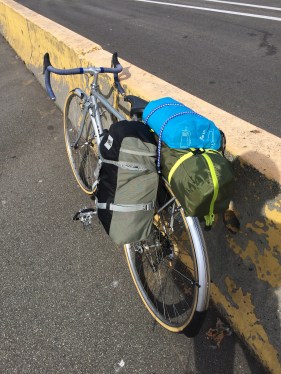
Waiting for the ferry to Gailiano
The final test was taking my Apollo on a solo bike camping trip to Galiano this August — Montague Harbour and then on to Dionisio Point, a somewhat remote site at the northern tip of the island.
I felt confident doing this as I have a fairly good understanding now of how my bike works, and what I need to do if something goes wrong. The bike worked beautifully. My thanks to the AMS Bike Co-op and everyone at the Bike Kitchen!
*No longer!! I’m regular faculty now at Douglas College — hooray!!
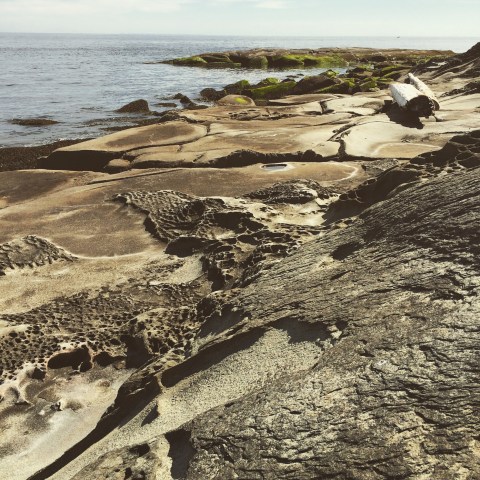
Dionisio
poetry & politics: lenses
July 8, 2015 § Leave a comment
lyrical in opposition to or in conjunction with the rhetorical
anger
–“the value of anger as a political/poetical resource” (Despres)
community & collective identity
–“we”
–related to pronominal forms (I-thou; you; we/our)
–related to readership & address (interpellation)
–different readers, communities of readers
–the bardic role: targeted audience, ‘we’
–critical interest in the first person plural (“we”):
Bonnie Costello: ‘impersonal personal’ 2009: “in what circumstances and in what terms might the poet speak of ‘we’?”
WR Johnson: ‘choral poetry’ 1982
Sharon Cameron: ‘amplified voice’ (Lyric Time, 1979)
(cited in Hunter, “Lyric & Its Discontents”)
empathetic imagination (mobilization); self moving into world
Antigone and Creon
–individual/repressed contra state; challenges to the state
–female virtu (Despres)
–poetry & the state; Plato
beauty is truth; truth beauty
–‘documentary adequacy’ (Heaney) & poetic form
poetic knowledge as a “thinking through the body” (Despres)
–the “bedrock of moral intelligence for much of feminist writing” (Despres)
—écriture féminine; écriture au féminin
–body as resource, bedrock, source of power; vulnerabilities of source of power & knowledge
–Mistral: earthenware vessels
–links to ecopoetry; earth as ground for the body
–linked to ‘in situ’
–Philoctetes as model for artist/poet figure (wounded, ineffective)
Philoctetes
–Rich, Dream of a Common Language
in situ
–a poem begins in a particular moment, in a particular place, in a particular body (Despres)
–poetry stands inside history, histories
a common language
–link back to community; poetry as drive to connect
–link to dream
dream
–vision, political vision
–empathetic imagining
–poetry as dreaming body
commitment
witness
poetry as knowledge or capacity
–Oren Izenberg 2011, Being Numerous: Poetry and the Ground of Social Life
–Bonnefoy “has proposed an ethical ‘pact’ (alliance) between poet and reader, ‘another way of knowing,’ the purpose of which is to ‘renew our relationship with others'” in Hunter, Lyric and its Discontents, p.86
–Bonnefoy: ‘Foreword: Ending the Mission, Inaugurating the Pact.’ in 20th Century French Poetry: A Critical Anthology2010

 kim trainor